Isabella Violaris

Hello, I’m Isabella Violaris—welcome to my Architectural Design

Studio 5 portfolio.

I am currently in my final year of the Bachelor of Architecture

at Swinburne University of Technology. In 2023, I completed a

six-month internship at Kosloff Architecture, which progressed

into a year-long role. In 2024, I joined Brand Architects, where

I’ve been working primarily on educational and public projects,

including sports pavilions.

Looking ahead, I aspire to become a registered architect within

five years of graduation, with the long-term goal of leading

projects and contributing meaningfully to the built

environment.

My design approach continues to evolve as I develop new skills

and insights. I’m especially inspired by Zaha Hadid—her bold,

boundary-pushing architecture and fearless approach to the

profession have shaped much of my architectural outlook.

Through this studio, I aim to deepen my understanding of how

creativity can be effectively integrated into architectural

solutions, while strengthening my critical thinking and

problem-solving abilities.

Echoes of Newport

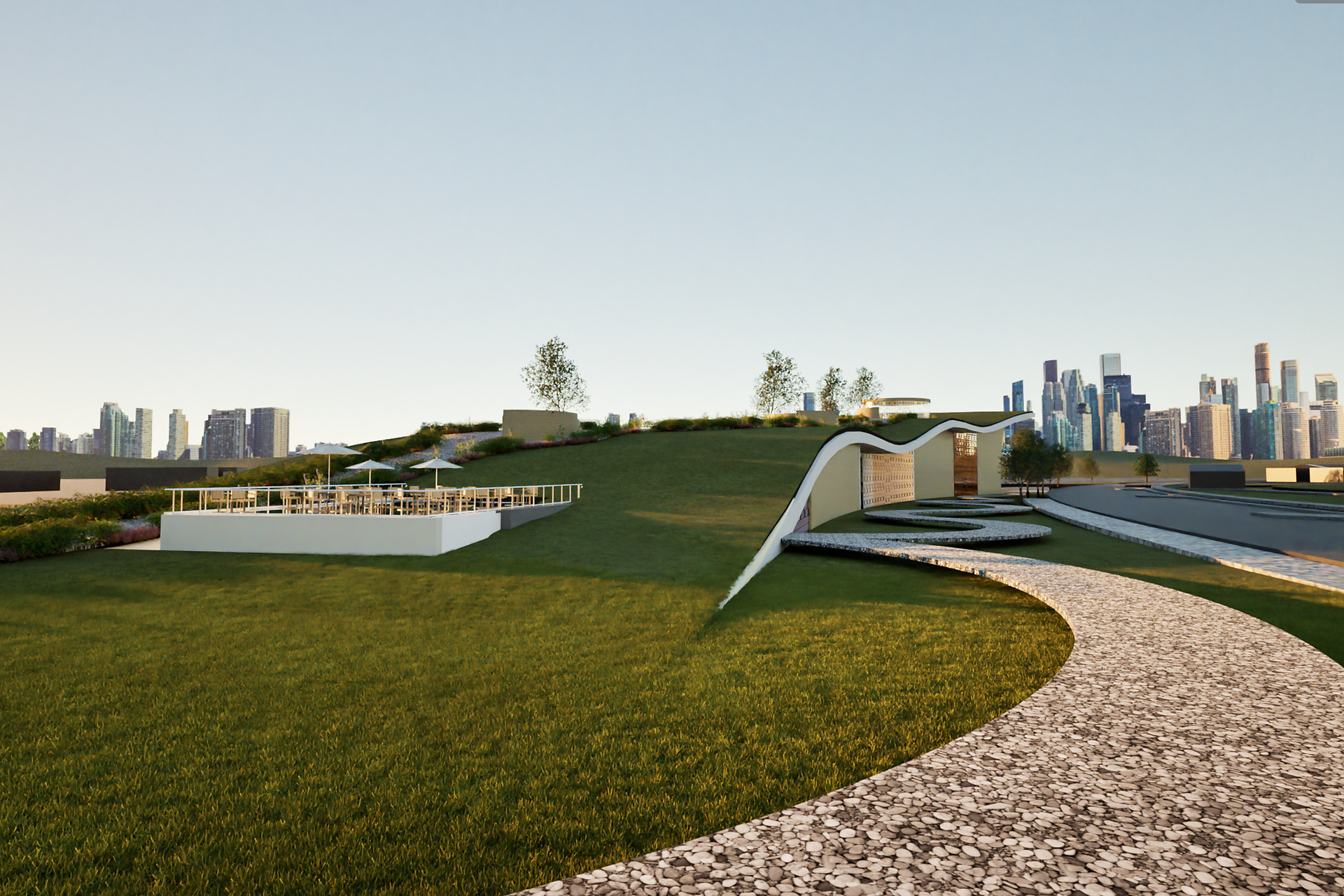
Echoes of Newport is a sensory museum that transforms storytelling into a fully immersive spatial journey. Rooted in the cultural and industrial heritage of Newport, the design guides visitors through the Past, Present, and Future using sound, light, touch, and atmosphere. A walkable green roof and fluid interior circulation create a seamless loop through galleries, courtyards, and open-air moments, blurring the boundary between landscape and architecture. Through multisensory installations and experiential exhibits, the museum reconnects people with memory, community, and Country — bringing history to life while inspiring a more thoughtful and imaginative future.

No Rezzavations House by Sarah Lake - Upgrade

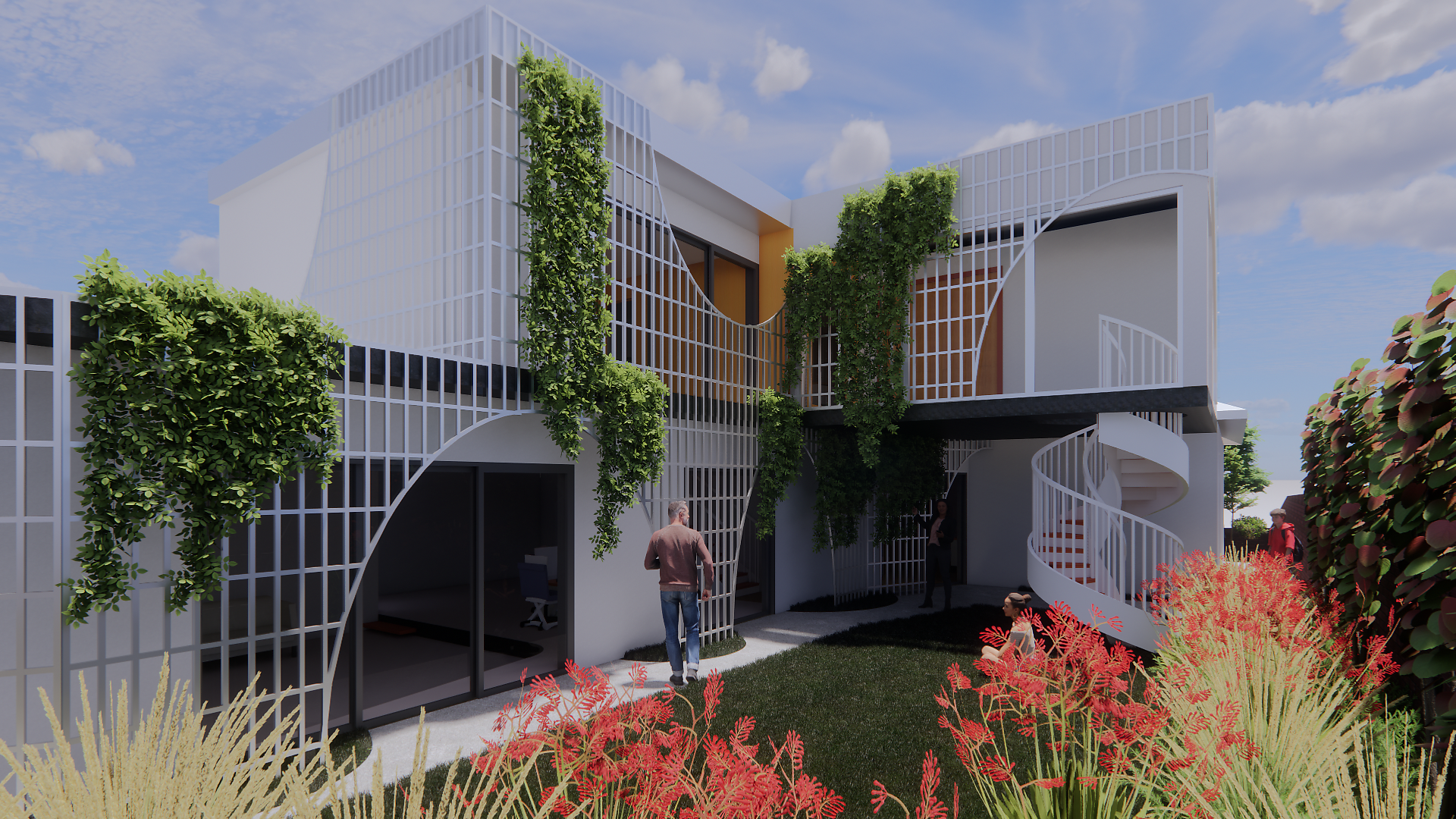
This redesign of Sarah Lake’s No Rezzavations House reimagines the dwelling as a more connected, communal, and landscape-responsive home. Soft curving geometries, climbing greenery, and porous screening elements create a sense of openness while enhancing privacy. The upgraded design strengthens indoor–outdoor relationships, encourages social interaction, and enriches everyday living through light, texture, and playful spatial transitions.

Abyss to Zenith

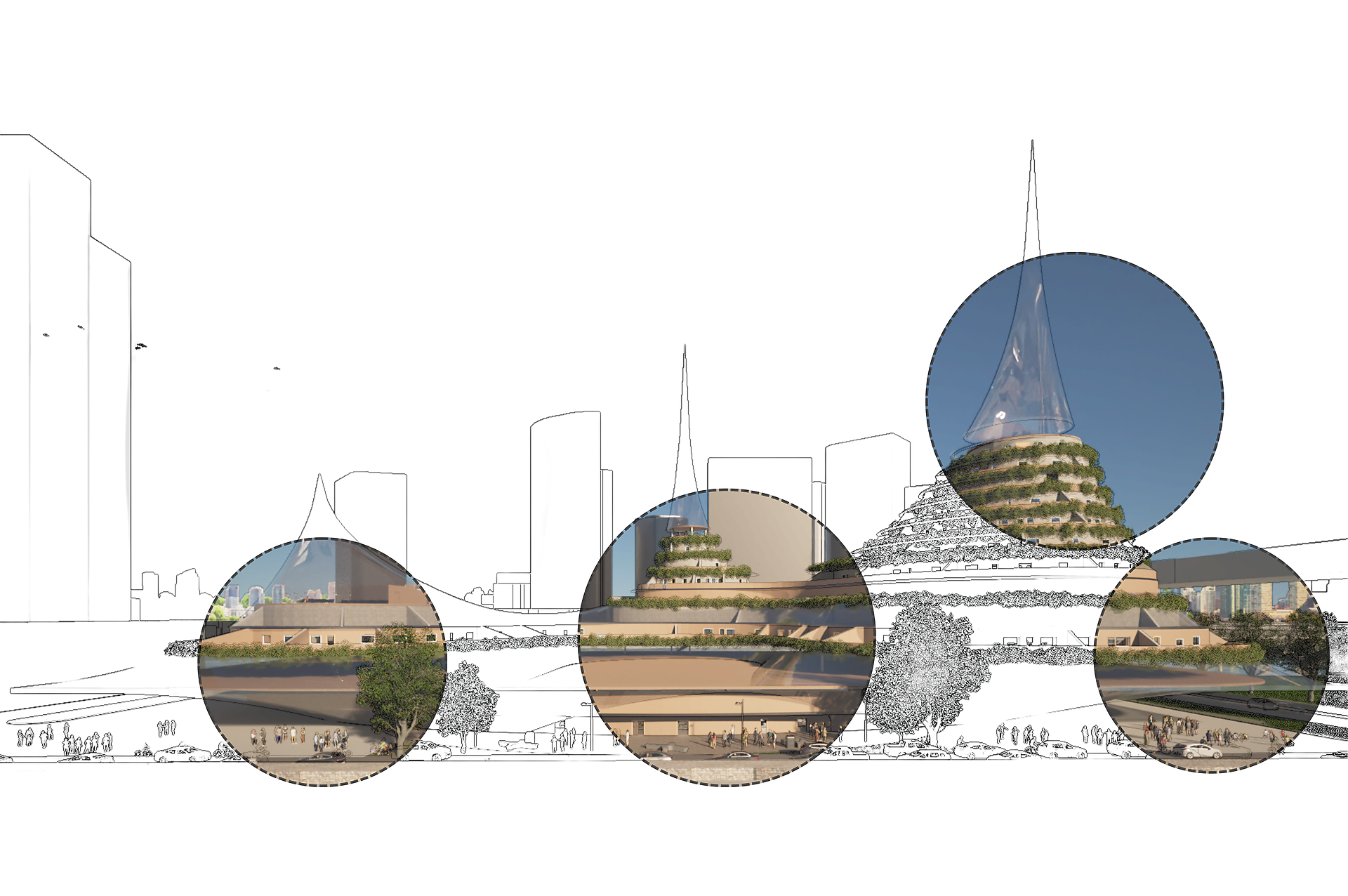
Abyss to Zenith is a sculptural architectural work born from the shifting dialogue between land, water, and sky along Melbourne’s waterfront. Conceived as a structure shaped by its environment, it began as an exploration of forces—pulled upward toward the stars and downward toward the riverbed—ultimately forming a building that acts as both a landmark and a lens.

Emerging from a union of sharp, angular geometries and a fluid tensile façade, Abyss to Zenith expresses a dual nature: strength and softness, solidity and motion. Each point of its form frames a different moment in the landscape, allowing residents and visitors to see the site anew through curated views of water, city, and sky.

As it evolved, the project expanded into a hybrid program of residences, public amenities, and community-driven spaces. Its internal world includes a market hall, thermal spa, food court, arcade, cinema, and an elevated observatory—each contributing to 24-hour activation and a vibrant sense of place.

Named for the Latin notion of rising “from the bottom of the river to the stars,” Abyss to Zenith embodies its own trajectory of ascent. It is a building defined by transition—between levels, environments, and experiences—and plays an active role in reshaping its precinct into a connected, community-focused destination.

AMDC Upgrade

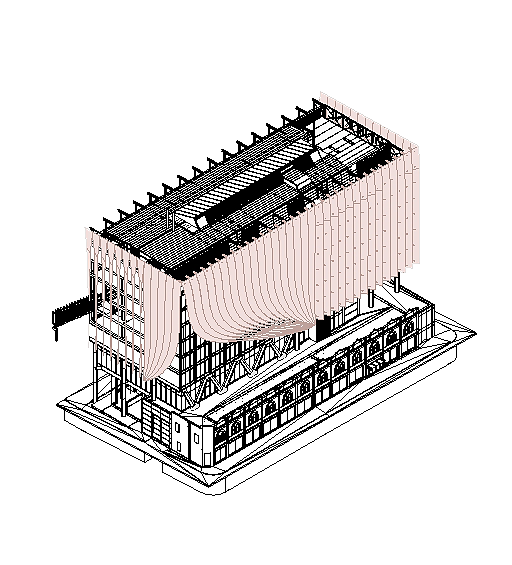
This design reimagines the architectural language of Swinburne University’s Advanced Manufacturing and Design Centre (AMDC) through a contemporary, expressive intervention. The proposal introduces a vertically layered structure that merges technical precision with sculptural softness, offering a dynamic contrast to the rectilinear discipline of the existing AMDC building in Hawthorn.

The upper volume is wrapped in a veil-like façade composed of rhythmic vertical panels that drape and gather in sweeping curves. This gesture softens the building’s mass and creates a sense of movement, as though the façade is gently pulled by environmental forces. Beneath this elegant layer, the structure reveals a highly rational, gridded framework, expressing the engineering clarity aligned with the AMDC’s identity as a centre for innovation, fabrication, and design research.

Programmatically, the design supports flexible academic and research functions, with interconnected levels that encourage collaboration and visibility. The interplay between a fluid outer skin and a disciplined interior skeleton reflects the university’s ethos: a place where creativity and technical rigour coexist. Through its layered façade, open floorplates, and articulated structural language, the building stands as a conceptual extension of the AMDC—an exploration of form, performance, and architectural experimentation within an educational context.